sábado, 14 de febrero de 2026

lunes, 28 de abril de 2025
lunes, 8 de abril de 2024
martes, 2 de enero de 2024
miércoles, 27 de diciembre de 2023
jueves, 7 de diciembre de 2023
lunes, 19 de junio de 2023
5 Mega Proyectos que le cambiarán la cara al Perú
viernes, 16 de junio de 2023
Europe’s Luxury Cruise Ships Emit As Much Toxic Sulphur As 1 Billion Cars — Study
Cruise ship pollution around ports higher than pre-pandemic levels, but air pollutants from cruise ships fell 80% in Venice following the city’s ban on large ships
Toxic air pollutants from cruise ships around ports are higher than pre-pandemic levels, leaving Europe’s port cities choking in air pollution, a new Transport & Environment study shows. Despite the introduction of the UN shipping body’s sulphur cap in 2020, last year Europe’s 218 cruise ships emitted as much sulphur oxides (SOx) as 1 billion cars. However, at the port of Venice air pollutants from cruise ships fell 80% following the city’s ban on large cruise ships. It shows that it is possible to tackle air pollution, says T&E, which calls for greater electrification at ports in order to save lives.

Image created by Zach Shahan using DALL·E.
Constance Dijkstra, shipping campaigner at T&E, said: “The pandemic provided some respite for port cities, but this is now well and truly over. Cruising is back and tourist hotspots like Barcelona and Athens are again choking on toxic air pollution from cruise ships. Venice has shown that tackling cruise ship pollution is possible, but bans aren’t the only way. Ports can significantly reduce pollution levels by forcing ships to plug into electricity at the port instead of running their engines, and by supporting the adoption of zero-emission fuels.”
Compared to 2019, the number of cruise ships, the time they spent around ports, and the fuel they consumed all increased by around a quarter (23% to 24%). This resulted in an increase of 9% in SOx emissions, 18% in NOx emissions, and 25% in PM2.5 emissions — three toxic air pollutants.
Barcelona was Europe’s most polluted port last year followed by Civitavecchia, a coastal port northwest of Rome and the Athenian port of Piraeus. In Barcelona, cruise ships emitted almost three times more SOx than all the cars in the city. SOx limits for cars in Europe are 100 times more stringent than those for ships¹.

See interactive version of this chart on T&E website.
Venice, on the other hand, improved significantly. The most cruise polluted port in 2019 dropped to 41st last year following a ban on large cruise ships entering the port that was introduced in 2021, leading to an 80% fall in SOx emissions.

See interactive version of this chart on T&E website.
That did not however stop Italy from surpassing Spain as the most cruise ship polluted country in Europe. Although the Mediterranean bears the brunt of cruise ship pollution, Norway came fourth in the ranking and even had the highest cruise traffic of any country, albeit with smaller ships.
The most polluting cruise ships operator was MSC Cruises — whose cruise ships emitted nearly as much SOx as all the passenger vehicles in Europe. Accounting for all of its subsidiaries, the Carnival group polluted the most.
Many cruise operators like MSC are investing in fossil gas (LNG) as a cleaner alternative. So far this year, more than 40% of cruise ships ordered were LNG-powered. These ships are better in terms of air pollution, but they are extremely damaging from a climate perspective due to methane leaks from their engines – a potent gas over 80 times more warming than CO2². P&O’s MS Iona, for example, emitted as much methane as 10,500 cows over a year.
Constance Dijkstra, concluded: “Switching from oil to gas is like trading smoking for alcohol. It may help the cruise ship industry to reduce air pollution but it is terrible from a climate perspective.”

Image created by Zach Shahan using DALL·E.
¹ The best marine sulphur standard (0.1% Sulphur (S) | 1000 ppm) remains 100 times worse than Europe’s sulphur standard for road diesel and petrol (0.001% S | 10 ppm) in place for the past 15 years.
² Methane’s (CH4) global warming potential (GWP) is 82.5 times higher than CO2 over a period of 20 years and 29.8 times higher over a 100-year period.
Originally published on Transport & Environment (T&E) website.
jueves, 8 de junio de 2023
China ultima la construcción de su primer crucero de gran porte, con 5G y Wi-Fi6
El dato importa, sobre todo, porque este primer crucero de gran tamaño que se construye en China promete inaugurar una nueva era en la industria de astilleros global pero, también, porque promete garantizar una conectividad a Internet de gran calidad, tanto en el mar como en la tierra.

Construido por el astillero Shanghai Waigaoqiao Shipbuilding Co (SWS), subsidiario de la Corporación de Construcción Naval del Estado de China (CSSC), y difundido por la propia SWS, tiene una longitud total de 323,6 metros y una manga moldeada de 37,2 metros, 2.125 habitaciones y capacidad para 5.246 pasajeros.
Por estas horas, la nave acaba de concluir su proceso de pintura del casco y avanza en la concreción de las últimas tareas programadas para este 2023, como lo serán dos viajes de prueba previstos para julio y agosto, de cara a concretar su zarpado inaugural en 2024.

Sin embargo, la noticia -desde el prisma de las telecomunicaciones- es bien recibida por su apuesta tecnológica centrada en que la experiencia de conectividad de sus tripulantes sea de gran calidad, en el mar como en la tierra. Para ello, por ejemplo, esta nave está equipada con redes de quinta generación móvil a bordo y Wi-Fi 6.
Y, justamente por eso, el sector de las telecomunicaciones se vio interpelado por la novedad. Fue el caso de Layi Félix, Access Network Director de Altice, quien se expresó a través de un posteo en su cuenta personal de Linkedin: “Hoy dia, la lentitud en la navegación de Internet es cada vez menos admisible para el usuario final. La semana pasada tuve la oportunidad de ampliar sobre los beneficios del 5G para la industria aérea y ahora se suma la industria marítima. Pronto será todo el ecosistema de transportación móvil”.
Inclusive, hasta al momento de definir cómo embellcer el casco, SWS determinó que la incorporación de tecnología de punta era el camino: “Mediante el uso de un láser de un solo punto, el rayo se proyecta directamente sobre la superficie del casco del barco a través de lentes ópticas avanzadas y espejos de alta precisión para formar un patrón de contorno y luego, la pintura del casco se completa colocando y rastreando los puntos”.
Con esta obra, China se suma a la lista de cuatro países que pueden realizar este tipo de embarcaciones (Alemania, Francia, Italia y Japón) y la expectativa es que realice rutas internacionales, entre Shanghái y destinos como Japón y el sudeste asiático. Y, según trascendió, el país ya inició hace alrededor de un año la construcción de un segundo crucero de gran porte.
lunes, 2 de enero de 2023
viernes, 9 de diciembre de 2022
martes, 21 de junio de 2022
jueves, 18 de noviembre de 2021
miércoles, 17 de noviembre de 2021
Gobierno aumentará el aforo y los vuelos en los aeropuertos
Se habilitará el turismo de cruceros en Perú
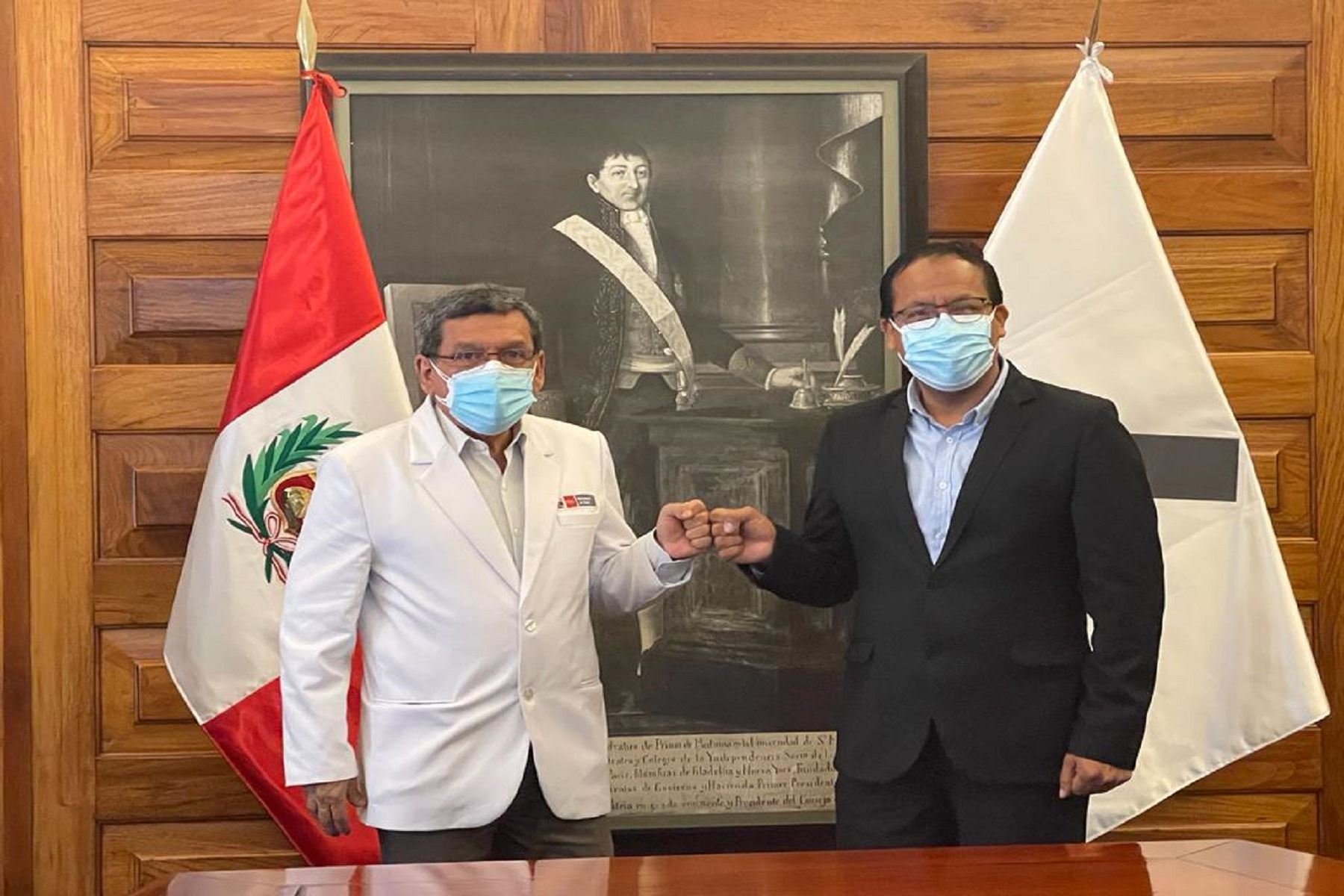
Ministros de Comercio Exterior y Turismo, Roberto Sánchez, y de Salud, Hernando Cevallos.
12:35 | Lima, nov. 16.
📌En reunión entre el ministro @RoberthoSanchez, del @MINCETUR; y @HCevallosFlores, del @Minsa_Peru; se acordó que el @AeropuertoLima y de regiones contarán con más aforo y vuelos. Asimismo, se habilitará el turismo de cruceros en el Perú. (1/2) pic.twitter.com/mqIZ6lsUfm
— MINCETUR 🇵🇪 (@MINCETUR) November 16, 2021
https://andina.pe/agencia/noticia-gobierno-aumentara-aforo-y-los-vuelos-los-aeropuertos-869731.aspx